
How to Choose the Right Paint Color for Home
A paint color that looks perfect on a small swatch can feel completely different once it covers an entire room. This guide will help you choose a color that suits your home’s lighting, furnishings, and mood and show you how to test your options before you commit.
How to choose the right paint color for home step by step?
Start with the parts of the room that are hardest and most expensive to change: floors, countertops, tile, and your largest sofa. Choose a wall color that works with those fixed elements. To narrow your options, hold each paint chip against plain white printer paper and look for its undertone. Aim for an undertone that agrees with your floor.
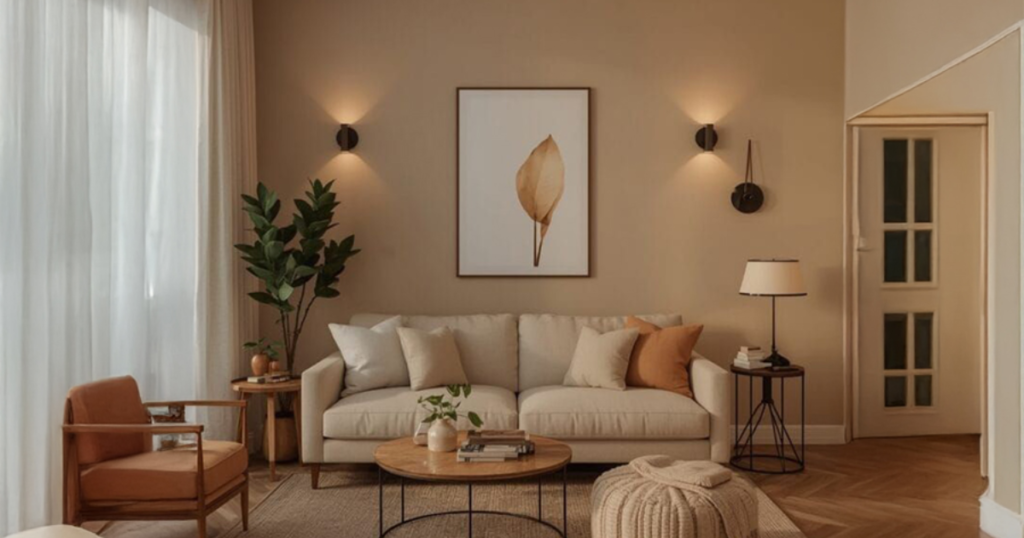
Then check the chip’s light reflectance value (LRV), which is printed on the back of most color chips, according to lighting retailer 1000Bulbs. Consider the room’s light. Note the Kelvin rating of your light bulbs and which direction the windows face; both can affect how a color looks.
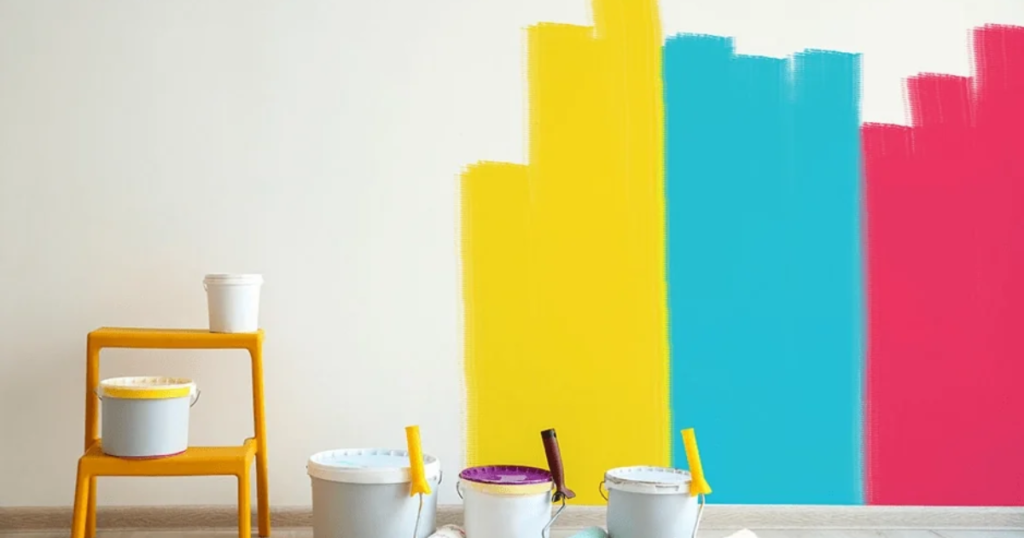
Cut your choices to three: a shade you love, one step lighter, and one step more muted. Brush two coats of each onto a white poster board at least two feet square. Move the boards around the room and look at them in the morning, midday, and at night before deciding.
Choose the paint sheen and quantity last. Calculate the wall area and estimate how many gallons you need before paying. Check the store’s return policy, too: Aboff’s, for example, does not accept returns on tinted paint. Once the color is settled, these final checks help you avoid buying more paint than the project requires.
You May Also Read: Interior Decoration Advice | Beautiful Modern Home Ideas for a Comfortable Living Space
How does lighting change a paint color?
Lighting changes how paint appears because a wall can reflect only the wavelengths of light that reach it. Warm bulbs add a yellow cast, cool bulbs add a blue cast. Consumer Reports groups bulbs into three color-temperature bands on the Kelvin (K) scale. These differences can shift a paint’s undertone: a blue-gray wall under yellow light may look muddy, as a cream wall under blue-white light may appear stark.
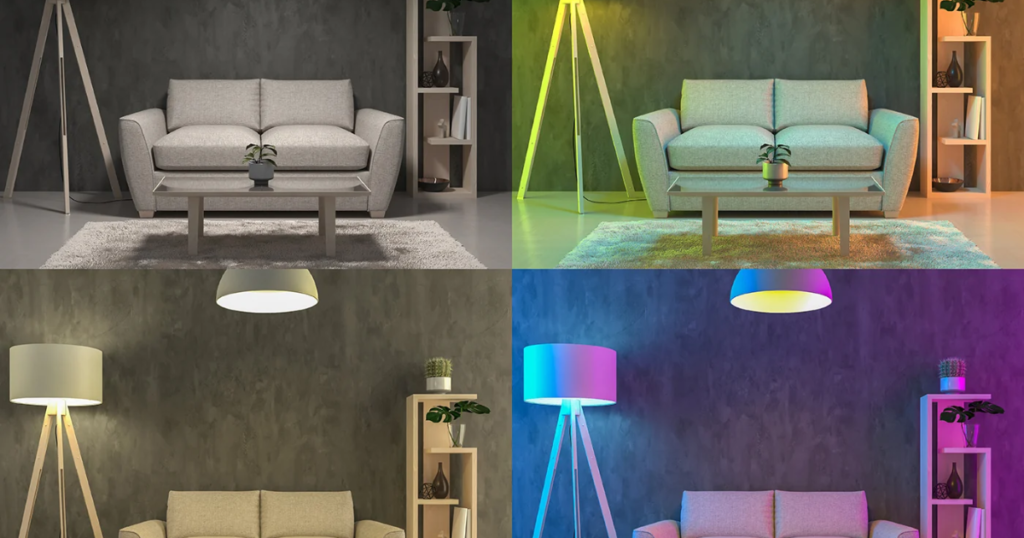
Window direction matters, too. In the Northern Hemisphere, north-facing rooms receive cooler, indirect light throughout the day, which warm undertones can balance. South-facing rooms get stronger, warmer sunlight, helping cooler shades retain their color. Consider the room’s bulbs and its natural light before settling on a paint color.
What is LRV, and which number works in small rooms?
Light Reflectance Value (LRV) is a score from 0 to 100 that indicates how much visible light a painted surface reflects. Black is at 0 and pure white at 100, though real paints do not reach either endpoint: Kylie M Interiors places the whitest retail whites near 94 and the darkest blacks in the low single digits.
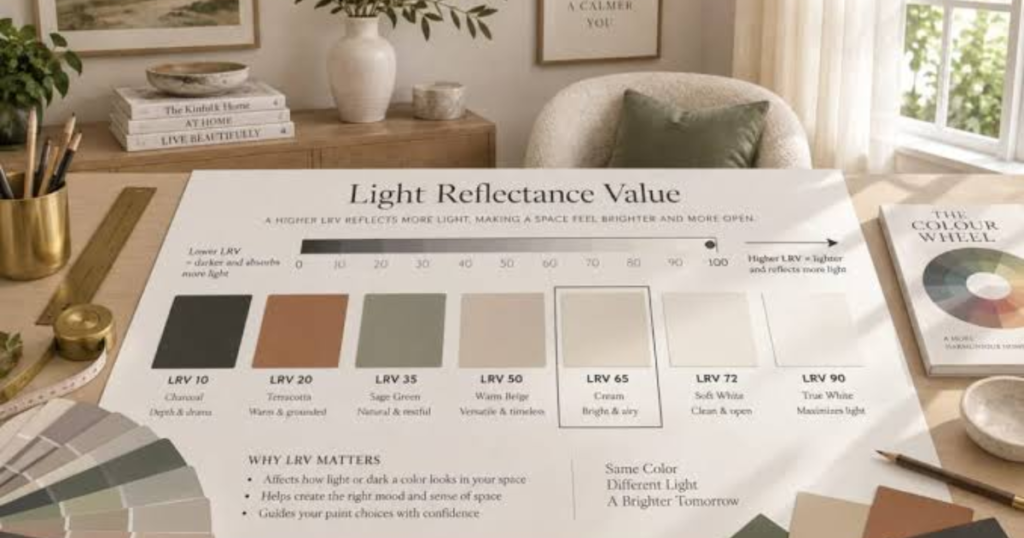
For home color schemes for small spaces, consider wall colors above LRV 50. PaintOutlets describes LRV 50 to 80 as the light range and colors below 20 as dark. An LRV 60 surface reflects three times as much light as an LRV 20 surface, so it can make more use of light from the same lamp. LRV measures reflectance, not hue: 1000Bulbs lists a Sherwin-Williams yellow at 78 and a brown at 5, the yellow is just 16 points below the brightest retail white noted above.
In small bedroom layout ideas with furniture, a tall, dark wardrobe against a pale wall can create a sharp outline that visually divides the room. Painting that wall a mid-tone with an LRV between 30 and 50 can soften the contrast while keeping the rest of the room light.
Modern paint colors for home
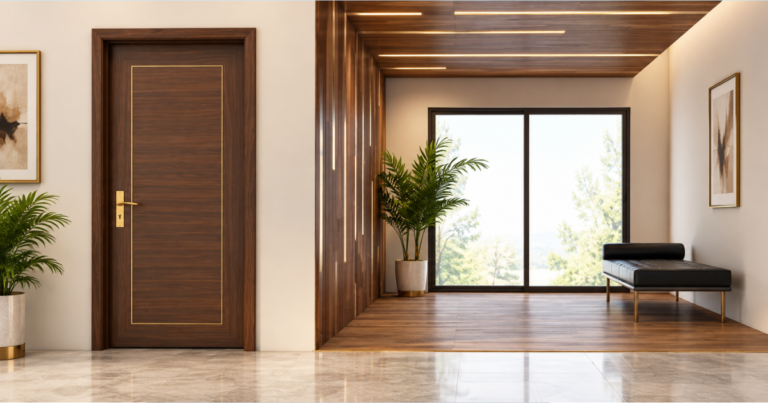
Modern paint colors can make a home feel considered without relying on stark white or bold color everywhere. Warm off-white, soft greige, muted sage, and dusty blue offer a calm starting palette. Choose undertones that suit the room’s flooring and furniture: a warm white pairs naturally with wood, while a cooler gray can complement stone or metal finishes.

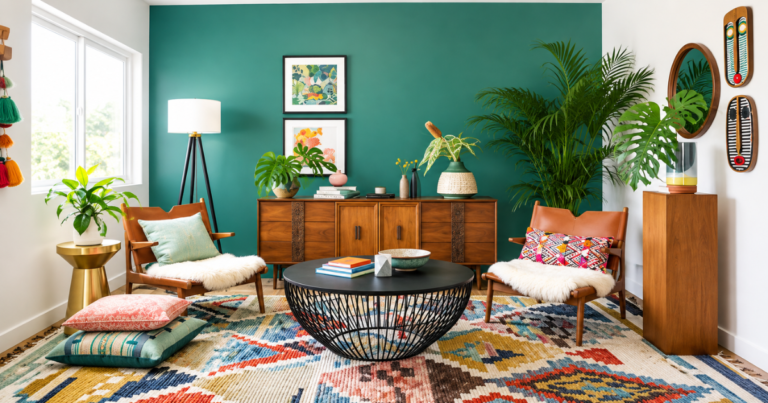
Light changes how paint reads, so test sample patches on more than one wall and look at them at different times of day. This is useful in homes where room orientation, window size, and artificial lighting vary. Use a deeper shade on a single wall, in a hallway, or on cabinetry for contrast, then carry one or two related colors through nearby rooms to create a cohesive flow.
Best color paint inside the house for living room
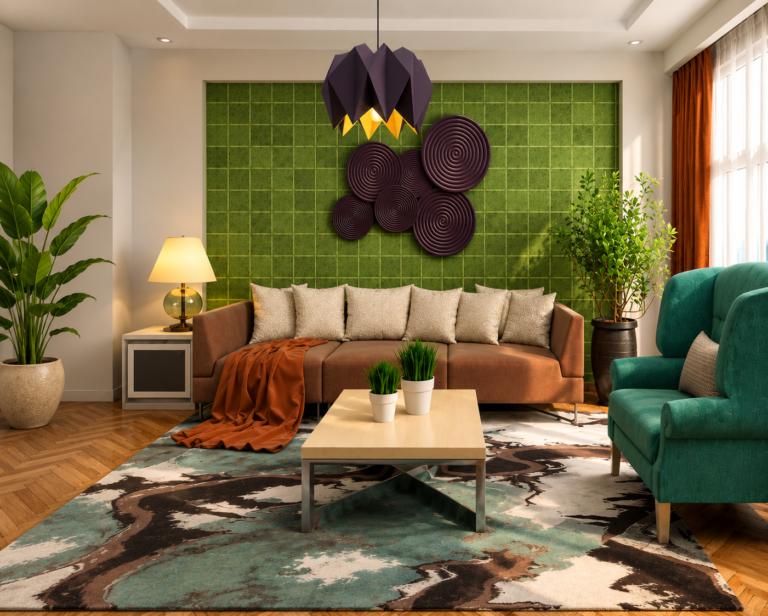
The best color paint inside the house for a living room depends on the room’s light, size, and furnishings. Warm white, soft beige, and light greige create a calm backdrop that works with many styles. Pale shades can also help a smaller or dimmer room feel more open, while deeper colors such as olive green or navy can add definition to a well-lit space.
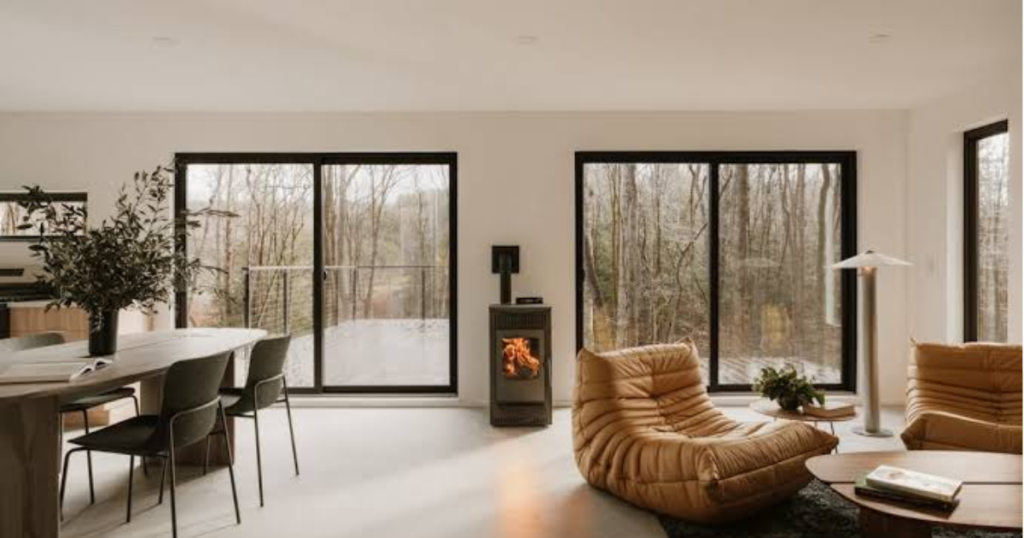
Consider how sunlight changes throughout the day and whether the room’s lighting is warm or cool. Paint a sample on the wall and view it at different times; the same color may look different under daylight and lamps. Once you settle on the wall color, coordinate trim, textiles, and accent pieces to complete the room.
Also Read: Best Bedroom wall color combination
How much does choosing the wrong paint color cost?
Choosing the wrong paint color can cost more than the paint itself. If the color looks different once it is on the walls, it does not work with the room’s lighting, flooring, or furniture. You may spend time repainting, and rearrange your schedule. The total depends on the room’s size, the paint and labor involved, and whether you do the work yourself or hire a professional.
Paint sample areas on more than one wall and check them at different times of day, since natural and artificial light can change how a shade appears. A small upfront test can help you avoid a larger repainting bill; for a specific estimate, compare local paint and labor prices.
Which paint colors are trending, and should you follow them?
Warm neutrals, muted greens and blues, and earthy terracotta tones are often discussed as popular paint choices. The mix that feels right can differ by home: natural light, flooring, furnishings, and regional preferences all affect how a color looks on the wall.
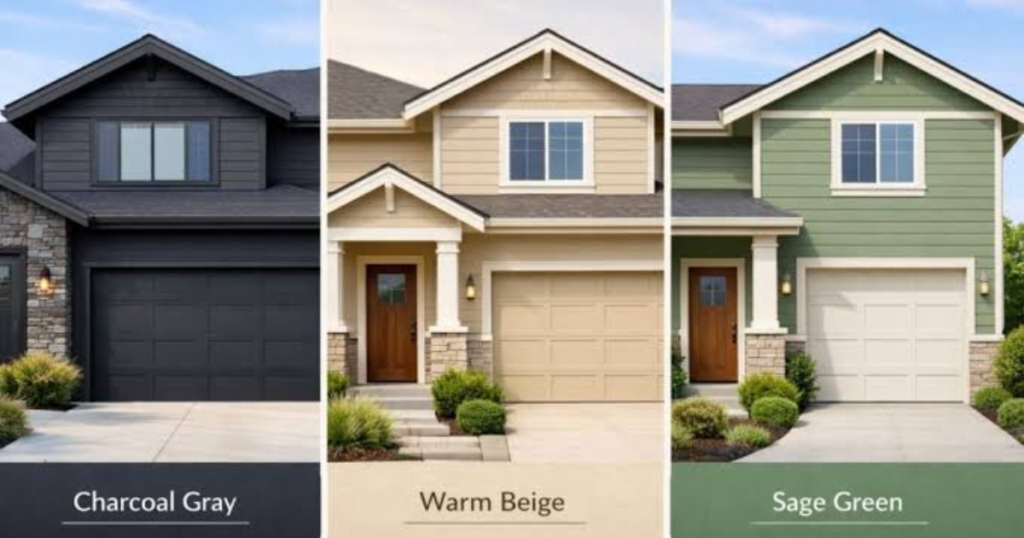
Treat a trend as a starting point, not a rule. Test a few sample shades in the room and view them in daylight and artificial light before deciding. If you love a trending color, use it where you can enjoy it; for a larger commitment, consider a softer or more adaptable shade.
When the usual advice does not apply
General advice can be a useful starting point, but it may not fit every situation. Guidance shaped by life may overlook the laws, services, costs, or family expectations someone faces. The reverse is also true. Even in a country, a person’s location, resources, and responsibilities can change what is practical.

Check what it assumes: access to a particular service, a specific legal process, or the freedom to make a decision without family or work obligations. Then compare those assumptions with your own circumstances and seek guidance from a qualified local source when the stakes are high. This makes it easier to adapt the useful parts of the advice without treating it as a rule for everyone.
Conclusion
How to Choose the Right Paint Color for Home: The right paint color is the one that works with your home’s light, finishes, and furnishings, not just a color chip. Narrow your choices, then paint sample areas and view them at different times of day before deciding. That small test can help you choose with greater confidence.
FAQS
What should I consider first when choosing a paint color?
Start with the finishes that are expensive to change: floors, countertops, tile, and large furniture. Choose a wall color that works with them before considering more flexible details.
How can I identify a paint color’s undertone?
Hold the paint chip against plain white printer paper. Look for a hint of yellow, pink, green, or blue, then check whether that undertone suits your floor.
What is LRV, and what LRV should I choose for a small room?
LRV, or Light Reflectance Value, measures how much visible light a painted surface reflects on a scale from 0 to 100. For small rooms, the brief recommends wall colors above 50. It also suggests a mid-tone between 30 and 50 for a wall behind a tall, dark wardrobe to soften the contrast.
How should I test paint colors before choosing one?
Narrow your options to three: a shade you like, one step lighter, and one step more muted. Apply two coats to white poster boards at least two feet square, then move them around the room and check them in the morning, at midday, and at night.