
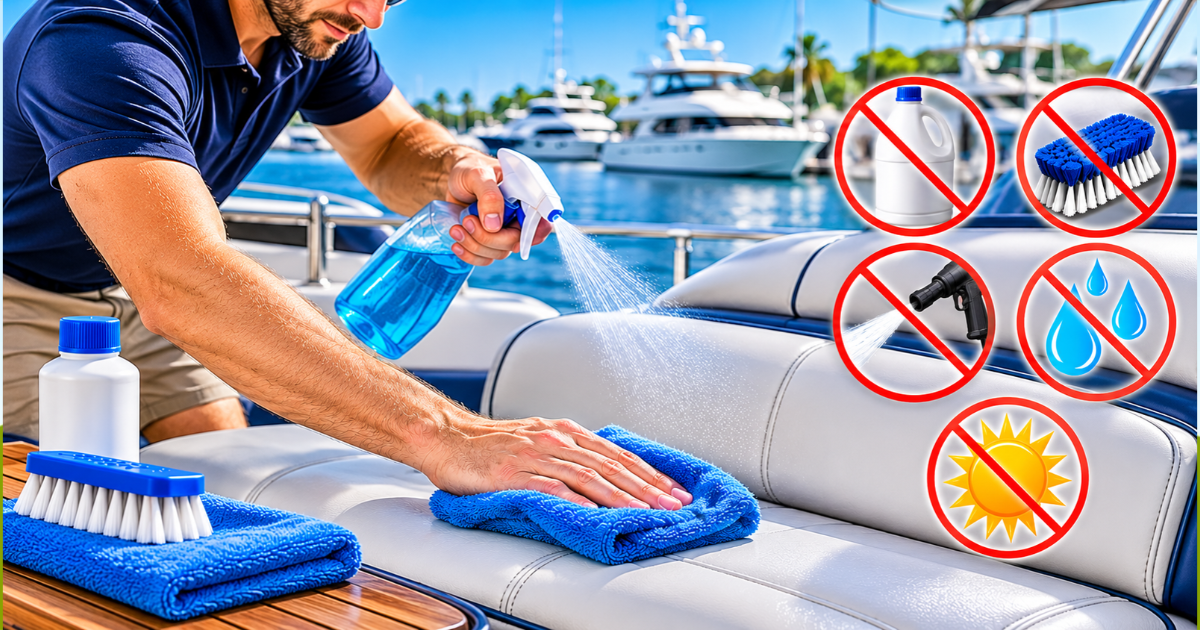
Expensive Marine Upholstery Cleaning Mistakes
Investing in boat seating should mean years of comfort, but cheap materials often split and discolor prematurely. A harsh cleaner or an aggressive scrub can turn a small spill into lasting damage on expensive marine upholstery. Knowing which cleaning mistakes to avoid can help you protect the fabric, finish, and comfort of your boat’s seating.
Common Marine Upholstery Cleaning Mistakes to Avoid
Every captain wants pristine seating, but standard domestic cleaning habits often do more harm than good out on the water.
Reaching for Harsh Household Bleach and Degreasers
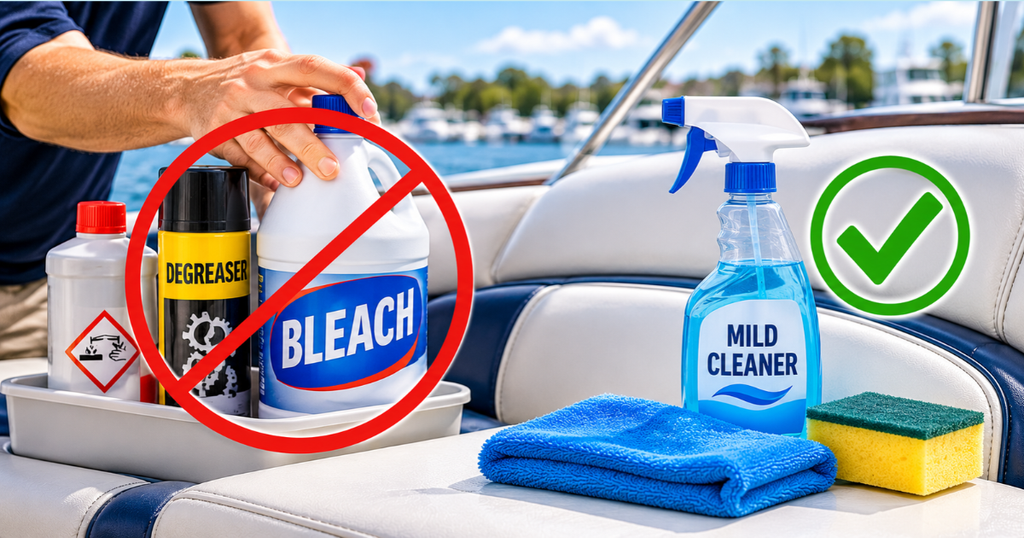
Reaching for bleach or a harsh degreaser may seem like a quick fix, but strong cleaners can damage vinyl surfaces and seams. To help prevent costly damage, avoid using them unless the product and surface-care instructions specifically allow it.
Clean vinyl regularly with a mild, pH-balanced cleaner instead. Use a soft cloth or sponge, and follow the cleaner’s directions. A gentle routine can help keep dirt from building up without exposing the surface to unnecessary harsh chemicals.
Cleaning while Scrubbing with Stiff Bristled or Abrasive Brushes
Stiff-bristled and abrasive tools can wear down a boat’s protective surface. Stiff nylon brushes, scour pads, magic erasers, and sandpaper may leave microscopic scratches or wear away the top layer of vinyl. Even when a stain takes effort to remove, scrubbing harder can cause damage that’s more difficult to fix than the mark itself.
Abrasives can also chew through high-strength marine stitching, leaving threads frayed. For routine cleaning, replace abrasive pads with a soft microfiber cloth and use gentle pressure. It’s a simple way to clean while being kinder to vinyl and seams.
Trapping Dampness Under Tight Canvas Covers of Marine
Putting a tight canvas cover over a damp boat can trap heat and humidity—the kind of conditions mold and pink bacteria thrive in. Once moisture is sealed in, stubborn stains can work deep into cushions and become much harder to remove. Let the boat and its cushions dry before buttoning down the cover.
Cushions need dedicated drying time, too. Set them in a shaded, well ventilated area, and stand them on edge for about twenty minutes to help air reach more of the surface. Once they’re dry, fasten the canvas snaps for a snug fit without trapping lingering moisture.
Forgetting the Post Saltwater Rinse of Expensive Marine Upholstery
After an ocean trip, give your seats and other exposed surfaces a quick rinse with fresh water. Salt spray can leave fine mineral residue behind, especially on horizontal surfaces where it settles as the moisture evaporates.
As the sun dries the surface, salt crystals can remain in cushion seams and textured fabric. When someone sits down, those crystals may rub against the material, gradually wearing at protective layers and stitching. A fresh-water rinse takes just a few minutes and helps wash away the residue before it has a chance to build up in Marine Upholstery.
Skipping Marine Safe UV Conditioners
Skipping marine-safe UV conditioner leaves boat seats exposed to harsh sunlight. UV rays can dry out exterior cushions and fade rich dyes, while unprotected vinyl may lose flexibility and crack over time.
A marine-grade conditioner helps shield vinyl from UV exposure and keep it supple. Apply it monthly as part of your regular care routine to help prevent premature wear and keep your boat interior comfortable for every trip.
Smart Daily Habits for Showroom Ready Seats
Simple post-outing routines keep boat upholstery looking immaculate without demanding hours of exhausting maintenance.
Rinse thoroughly with clean freshwater
After every trip, rinse your gear or surfaces thoroughly with clean freshwater. This helps wash away salt spray, airborne dirt, and fine dust before they have a chance to dry and leave residue behind. Pay attention to areas where grime tends to collect, and let clean water reach the whole surface. A quick, careful rinse is an easy way to keep things clean between outings.
Wipe gently with balanced boat soap
For everyday messes, wipe the surface gently with warm water and a balanced boat soap. A soft cloth can help lift sunscreen oils, beverage spills, and food crumbs without the need for hard scrubbing. Rinse the area with clean water and wipe it dry to remove leftover soap. Check the soap label for directions, especially if you’re cleaning a delicate or specialty surface.
Dry with plush microfiber cloths
Use a clean, plush microfiber cloth to dry wet surfaces as soon as you can. Press it gently against standing water so the cloth can soak it up, and switch to a dry section when it becomes damp.
Removing water promptly helps prevent water spots and keeps moisture from soaking into the interior foam. Give seams and other damp areas a careful pass, then let the surface air-dry completely.
Allow complete airflow
After cleaning, let the seat cushions air dry completely in an open, shaded area. Give them enough space for air to move around each cushion, and turn them if needed so all sides can dry.
Wait until the cushions are fully dry before installing heavy travel covers. Putting the covers on too soon can trap dampness, so a little extra drying time helps keep the cushions ready for your next trip.
Apply seasonal protective conditioners
Apply an approved UV protectant to your surfaces once a month to help shield them from sunlight and keep them supple. Before applying, make sure the surface is clean and dry, and check the product label to confirm it’s suitable for the material.
Use the conditioner as directed, spreading it evenly without applying more than recommended. A regular monthly treatment is an easy way to keep up with seasonal care and help protect surfaces through sunnier days.
Simple Habits Keep Seating Pristine for Years
Simple, regular care can help keep your boat seats looking their best for years. To clean boat seats, use mild soap and water rather than harsh chemicals, which can be tough on marine fabric. Wipe gently, then make sure the seats are ready to use before heading out.
A quick five-minute wipe-down after a day on the water helps remove everyday dirt and keeps the fabric soft and clean. Keeping the interior tidy also helps preserve your vessel’s resale value, so make this easy step part of your routine.
Conclusion
Marine upholstery can be costly to replace, so a quick cleaning fix may create a bigger problem. Use products made for your upholstery, test them in a hidden spot, and follow the care instructions before tackling a stain. If you’re unsure about the material or the damage, ask a marine upholstery professional for guidance.
FAQs
Is bleach safe for cleaning marine upholstery?
Bleach is generally not recommended for routine marine upholstery cleaning. It can weaken stitching, damage protective coatings, and contribute to premature material deterioration. Check the manufacturer’s cleaning instructions before using any stain remover.
Can pressure washing ruin expensive marine upholstery?
Yes. High-pressure water can damage delicate upholstery surfaces, force moisture into seams, and potentially weaken stitching. A soft cloth or gentle brush is a safer option for routine cleaning.
Can sunscreen and saltwater permanently stain marine upholstery?
Yes. Sunscreen, salt residue, and other contaminants can leave stubborn stains or contribute to surface deterioration if ignored. Clean affected areas promptly using an appropriate marine upholstery cleaner.
How does improper drying affect marine upholstery?
Leaving upholstery damp can encourage mold and mildew growth, create unpleasant odors, and damage internal cushion materials.